Dreaming about stepping out your door and being just moments from Ocean City’s famous boards? Buying a boardwalk-area condo can put you close to the beach, shops, dining, and seasonal events, but it also comes with trade-offs that matter once the vacation glow wears off. If you are thinking about buying near the Boardwalk in Ocean City, this guide will help you understand how the area really works, what to look for in a condo, and which questions to ask before you make an offer. Let’s dive in.
What “boardwalk area” really means
In Ocean City, the boardwalk corridor is not one uniform stretch where every block feels the same. The Boardwalk runs about 2.5 miles and is about 50 feet wide, and the city notes it is open daily, 24 hours a day. Business activity changes by season, with the busiest stretch from Memorial Day to Labor Day and a much quieter feel in the off-season.
The heart of the district is generally the 6th through 14th Street band. City materials and zoning patterns point to this section as the main boardwalk core, where activity, walkability, and event concentration are strongest. If you want to be in the middle of the classic Ocean City boardwalk experience, this is usually the clearest fit.
Blocks north of that core, especially 1st through 5th Street, feel more transitional. You can still be boardwalk-adjacent, but you may not have the same concentration of retail activity and events. South of the core, roughly 15th through 23rd Street, you can still enjoy easy boardwalk access, but you are farther from the busiest commercial section.
That distinction matters when you see a property described as being in the “boardwalk area.” In many cases, that means convenient access to the boards, not necessarily direct front-row boardwalk frontage. Knowing that difference can help you match the property to your goals.
Why location within the corridor matters
A condo near 8th Street may live very differently from one near 20th Street, even if both are marketed as boardwalk-area properties. The closer you are to the 6th through 14th Street core, the more likely you are to be near major events like Family Nights, Mummers Night, the Boardwalk Art Show, and Jeep Invasion. That can be a plus if you want energy and foot traffic, or a drawback if you want more quiet.
If your priority is walkability and quick access to attractions, the core section often stands out. If your priority is a little more breathing room, stepping outside the busiest zone may be the better move. This is one of the biggest reasons a local, block-by-block perspective matters when you are comparing condos.
What kinds of condos you will find
The boardwalk condo market in Ocean City is not just one type of building. Current listing examples in the corridor show a mix that includes larger oceanfront condo buildings, boutique-sized condo properties, and even very small multi-unit structures. That range gives buyers options, but it also means each building can come with a very different ownership experience.
Some buyers want a larger building with amenities and a more established condo structure. Others prefer a smaller building with fewer units and a more intimate feel. Neither is automatically better. The right choice depends on how you plan to use the property and how comfortable you are with each building’s rules, costs, and maintenance setup.
The setting is also part of the lifestyle equation. The boardwalk is lined with shopping, amusements, arcades, ice cream shops, restaurants, hotels, and event spaces. The closest units often offer unbeatable access and views, but they can also come with less privacy and more day-to-day activity right outside your door.
The trade-off between access and privacy
This is one of the biggest decisions boardwalk-area buyers make. Do you want front-row convenience, or would you rather be close enough to enjoy the area without being right in the middle of it? A direct oceanfront or boardwalk-view condo can feel special, but the same location may also bring more noise, more foot traffic, and more seasonal intensity.
For some buyers, that energy is the whole point. For others, it wears thin over time, especially during the busiest summer weeks. As you tour properties, think beyond the photos and ask yourself what everyday use will feel like in July, on holiday weekends, and in the quieter off-season months.
HOA and condo documents deserve close review
When you buy a condo in New Jersey, the association’s governing documents matter in a big way. Under the New Jersey Condominium Act, the association’s bylaws govern administration and management, and the association can act through its officers, enter contracts, and enforce assessments. Associations also have lien rights for unpaid assessments and related costs.
In practical terms, that means you need to understand the building’s rules and financial structure before you buy. Review the master deed, bylaws, current budget, reserve funding, and any recent or planned special assessments. These documents can tell you a lot about how the building is run and whether there may be added costs ahead.
This is especially important in older shore buildings, where maintenance planning can have a major effect on long-term ownership costs. A lower monthly fee may look appealing at first, but it is only part of the picture. You also want to know whether the association is preparing responsibly for future repairs.
Inspection oversight is part of the picture
At the state level, the New Jersey Department of Community Affairs says condominiums and other multiple dwellings are subject to five-year cyclical inspections. The association is generally responsible for registration and correcting cited violations. The state has also said that 2024 structural integrity legislation was intended to strengthen inspection and ongoing maintenance standards for condominiums and co-ops.
For you as a buyer, this makes building condition and association follow-through especially important. It is smart to ask about inspection history, any cited issues, and how the association handled them. You do not need to be alarmed by inspections, but you do want a clear view of how well the building is maintained.
If you want rental income, read the rules carefully
Many boardwalk-area condo buyers are also thinking about seasonal rental potential. Ocean City’s seasonal rental ordinance defines a seasonal rental as any rental of residential accommodation for less than one year, including part of the May 15 to September 15 period. The city may also require a bond if repeated disorderly conduct complaints are substantiated.
That is only part of the story, though. The building’s own rules may be just as important as the city’s baseline standards. Rental minimums, guest policies, occupancy rules, and other condo restrictions can shape whether a property fits your plans.
If rental use is part of your strategy, make sure you confirm all of the following before you move forward:
- Whether short seasonal rentals are allowed
- Any minimum rental term requirements
- Guest and occupancy rules
- Move-in or turnover procedures
- Parking rights for owners and renters
- Any history of rental-related issues or enforcement
A condo that looks great on paper may not work for your goals if the building rules are too restrictive. Clarity now can save you frustration later.
Parking can shape your daily experience
Parking is one of the most important lifestyle factors near the boards. Ocean City says there are more than 2,800 spaces in boardwalk and downtown lots plus 1,142 metered street spaces. The city’s parking code sets beach-and-boardwalk meters at $2 per hour, and surface lot rates do not exceed $25 per day.
The city also notes that municipal lots and street parking are free in the off-season between October 31 and May 1. Some lots have special rules, including the 9th Street and Boardwalk lot, which is a one-hour time-limit lot. There are also certain permit parking options and designated off-season parking spaces in some areas.
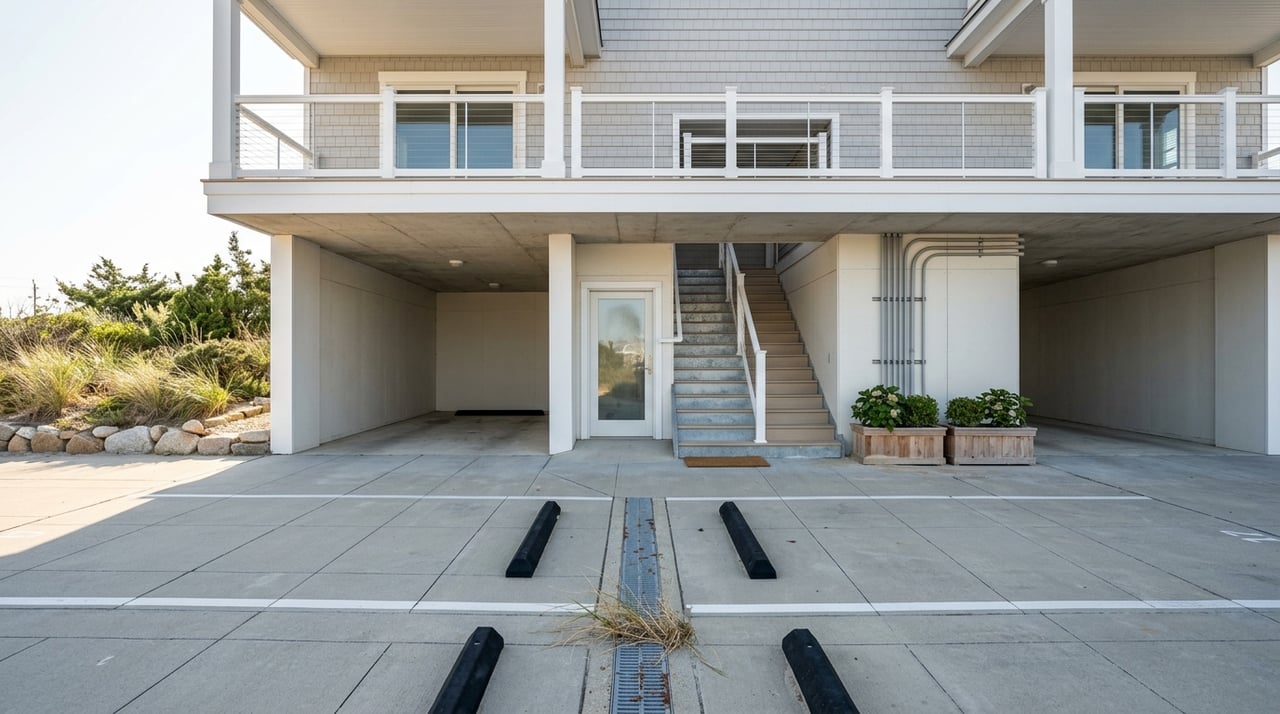
If your condo includes deeded or assigned parking, that can be a major advantage. If it does not, be realistic about what daily parking will feel like during summer weekends. This is one of those details that can have a bigger impact on owner satisfaction than buyers expect.
Noise, bikes, and event traffic matter too
Living near the Boardwalk means you are buying into an active public space, not just a view. Ocean City’s noise ordinance prohibits yelling, shouting, hooting, whistling, or singing on the boardwalk or in nearby dwellings between 10 p.m. and 8 a.m. if it disturbs others. That helps set boundaries, but it does not remove the natural hustle and bustle of a busy shore destination.
Bike traffic is also regulated by season. In high summer, riders generally may use the boardwalk only until noon, and nighttime riding is not allowed. These rules help manage crowds, but they also remind buyers that the boardwalk environment changes by time of day and season.
This is why details like balcony orientation, bedroom placement, window exposure, and quiet-hour expectations can matter just as much as ocean views. A condo that faces the action may feel very different from one tucked slightly off the main flow.
A simple way to narrow your search
If you are trying to choose the right boardwalk-area condo, start with your main goal. Most buyers fall into one of three buckets:
- Walkability first: Focus on the 6th through 14th Street core
- More breathing room: Look just outside the busiest central stretch
- Rental use plus convenience: Prioritize location, parking, and building rental rules together
You can also use this quick comparison as a starting point:
| Priority | Best fit to explore | Key trade-off |
|---|---|---|
| Close to events and activity | 6th-14th Street | More crowds and noise |
| Easier access with less intensity | 1st-5th or 15th-23rd Street | Farther from main retail core |
| Strong day-to-day convenience | Units with deeded parking | May come at a price premium |
| Rental flexibility | Buildings with clear rental allowances | More document review needed |
What to review before making an offer
Before you move forward on a boardwalk-area condo, slow down and review the details that can affect both lifestyle and cost. The right condo is not just about location. It is also about how the building operates and how the property fits your plans.
Here is a practical pre-offer checklist:
- HOA budget and reserve funding
- Master deed and bylaws
- Current condo fees
- Parking rights and restrictions
- Rental rules and minimums
- Inspection history and cited issues
- Any history of special assessments
- Unit orientation, privacy, and noise exposure
A smart purchase comes from looking at the whole picture. The best boardwalk-area condo for you is the one that matches how you actually want to live, visit, or rent.
Buying near the Boardwalk can be a fantastic move if you go in with clear expectations. The right block, building, and condo rules can make all the difference between a property that simply looks great and one that truly works for your lifestyle. If you are thinking about buying in Ocean City’s boardwalk corridor, Cheryl Huber can help you compare options, understand the fine print, and find the right shore fit.
FAQs
What does “boardwalk area” mean in Ocean City, NJ?
- In practice, it usually means a condo with convenient access to the Boardwalk, not always direct frontage. The 6th through 14th Street stretch is generally considered the core of the district.
Which part of the Ocean City Boardwalk is busiest for condo buyers?
- The 6th through 14th Street section is typically the busiest and most walkable, with many events and the strongest concentration of boardwalk activity.
Are boardwalk-area condos in Ocean City all large condo buildings?
- No. Buyers may find a mix of larger oceanfront buildings, boutique condo properties, and very small multi-unit buildings.
What should you review in an Ocean City condo association before buying?
- Review the master deed, bylaws, budget, reserve funding, parking rights, rental rules, inspection history, and any past or planned special assessments.
Can you rent out a boardwalk-area condo seasonally in Ocean City?
- Possibly, but you need to confirm both city rules and the condo association’s rules. Building rental minimums, guest policies, and occupancy standards can affect what is allowed.
Why is parking so important when buying near the Ocean City Boardwalk?
- Summer parking demand can change how easy the property is to use. Deeded or assigned parking can be a major advantage for owners and guests.
How does living near the Ocean City Boardwalk affect noise and activity?
- Boardwalk-area condos are close to events, foot traffic, and seasonal activity. The city has noise and bike rules, but buyers should still expect a more active setting, especially in the core blocks.