2,079 people live in Sea Isle City, where the median age is 65.2 and the average individual income is $84,171. Data provided by the U.S. Census Bureau.
Total Population
Median Age
Population Density Population Density This is the number of people per square mile in a neighborhood.
Average individual Income
Sea Isle City is one of those rare shore towns that manages to hold two seemingly contradictory identities without contradiction. By day, it is a thoroughly family-oriented beach destination where children bike along the Promenade at sunrise and grandparents crab off the bay-side pier at Dealy Field. By night — particularly in summer — it transforms into one of the liveliest social scenes on the entire Jersey Shore, anchored by open-air tiki bars, live tribute bands at Excursion Park, and a genuine communal energy that its regulars describe, with no irony whatsoever, as "Sea Isle Pride."
What distinguishes Sea Isle from its quieter neighbors to the south, like Avalon and Stone Harbor, is that it does not pretend to be exclusive. It is loud, warm, and welcoming in a way that feels entirely earned rather than performed. The town's nickname, "The Sea and Sand City," understates what it actually delivers: five miles of wide, well-maintained Atlantic beachfront, a robust dune system, vast salt marshes on the bay side teeming with blue crabs and osprey, and a social infrastructure built to keep people genuinely busy from Memorial Day through Labor Day. Yet even in the off-season, Sea Isle maintains a cozy, tight-knit quality that keeps a loyal base of year-round and shoulder-season residents coming back well after the summer crowds thin.
It earns its reputation as one of Cape May County's most beloved resort communities not through polish alone, but through character.
The story of Sea Isle City is, in large part, the story of one extraordinarily ambitious man. Charles K. Landis — the same entrepreneur who founded Vineland, New Jersey — purchased Ludlam Island in 1880 with a vision that was grandiose by any standard: he wanted to build a Mediterranean-style resort town modeled after Venice, complete with canals and a European sensibility transplanted to the South Jersey coastline. Before Landis arrived, the island was used primarily for grazing cattle. He dredged canals, installed a trolley system, and laid out the town's grid in a way that still shapes its character today, most visibly in the street that still bears his name, Landis Avenue, which remains the commercial spine of the community.
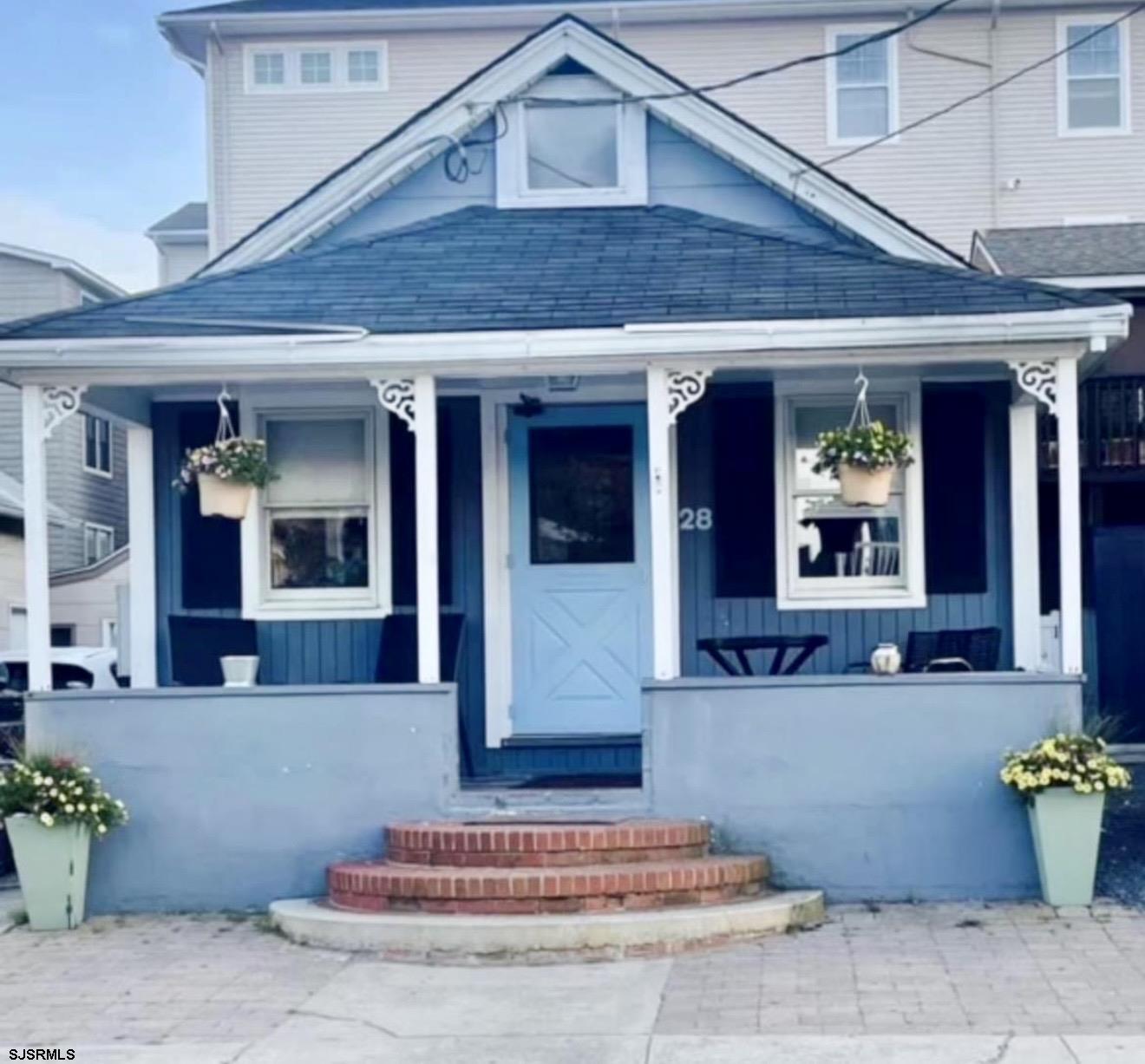
The Victorian era brought grand wooden hotels and ornate seaside cottages that gave early Sea Isle an architectural charm consistent with Landis's original aspirations. That legacy, however, was largely erased on March 6-7, 1962, when the catastrophic Ash Wednesday Nor'easter struck the coast with a ferocity that reshaped the entire Jersey Shore. Much of the original oceanfront — including many of those irreplaceable Victorian structures — was destroyed. The rebuilding that followed shifted the town's architectural identity decisively toward more functional, flood-conscious designs: stilted saltbox-style homes built to survive storm surge, with vinyl siding chosen for its resistance to relentless salt air.
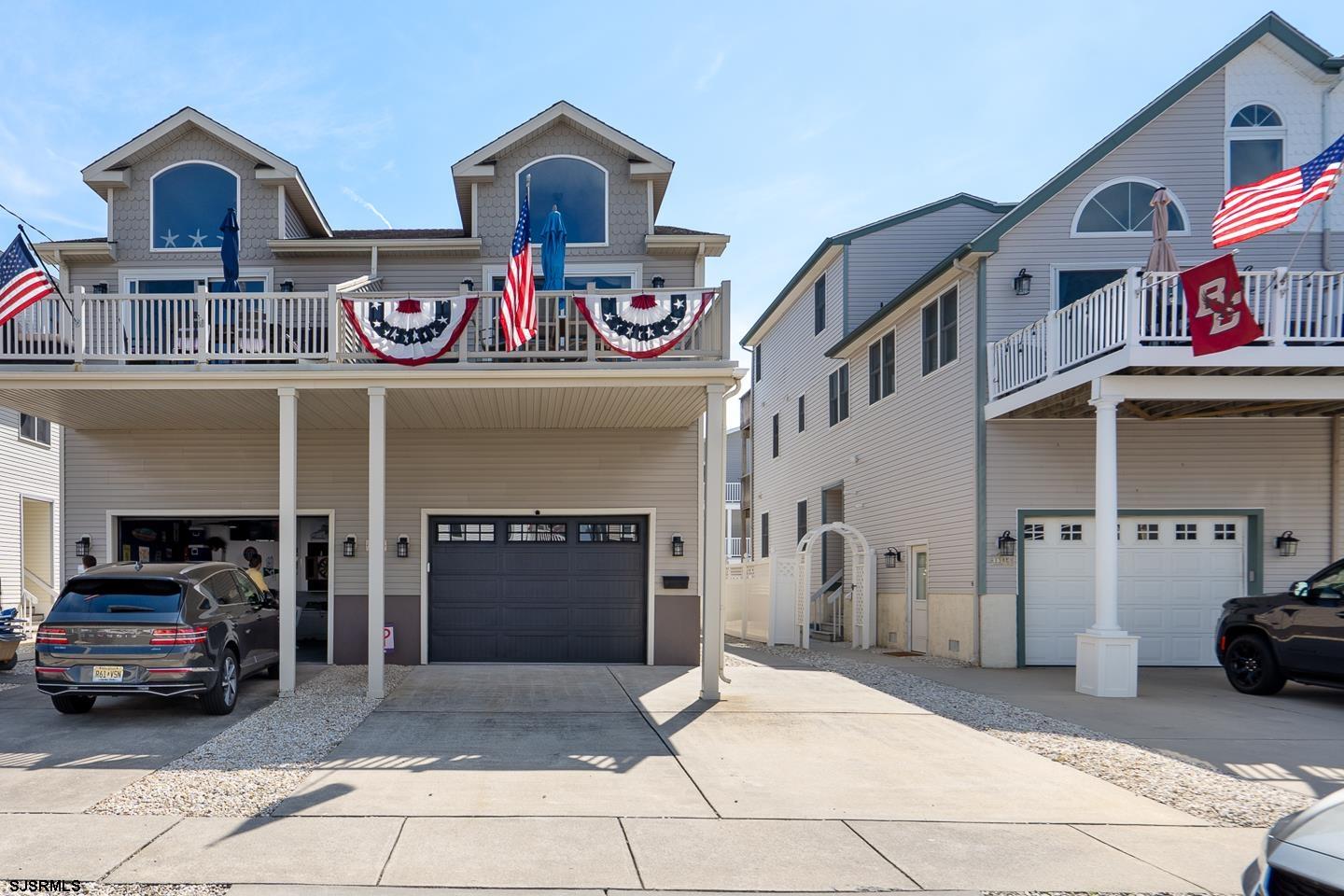
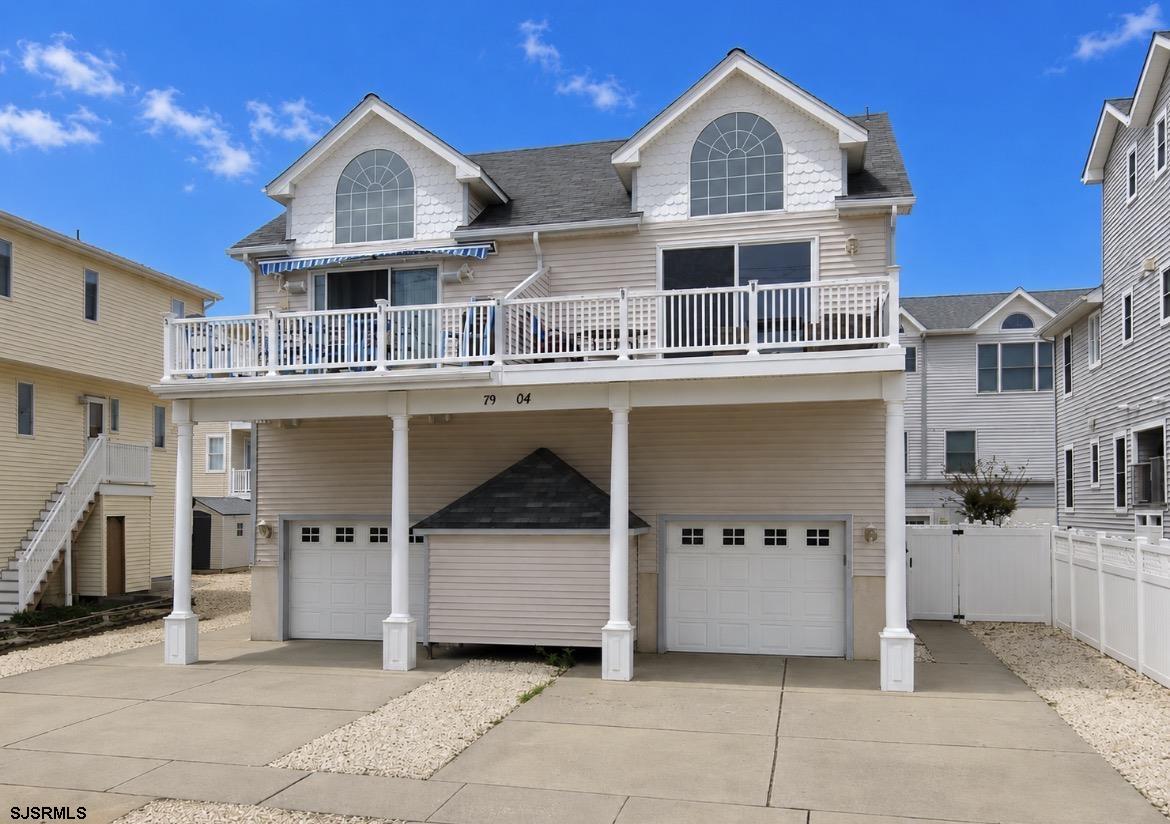
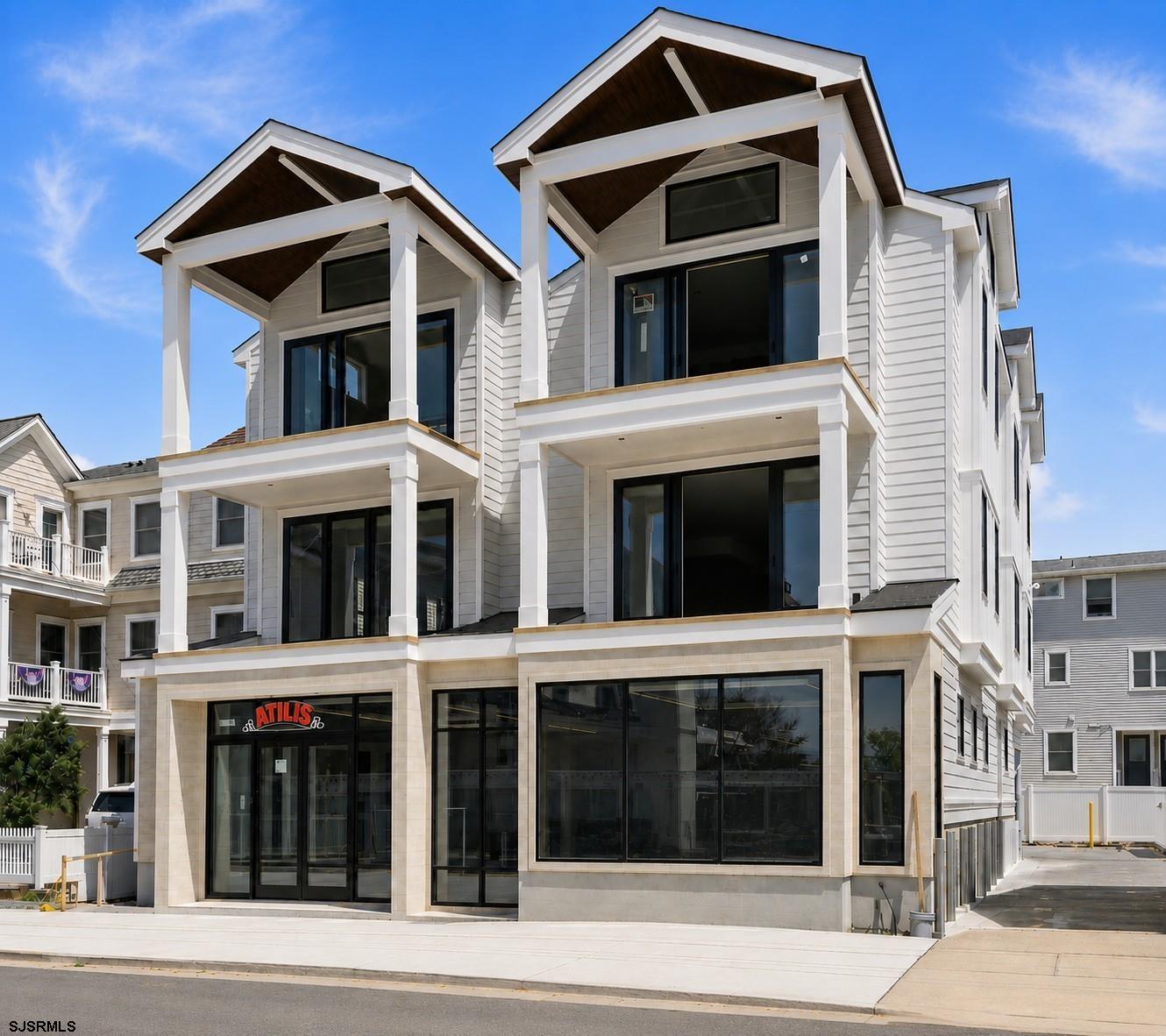
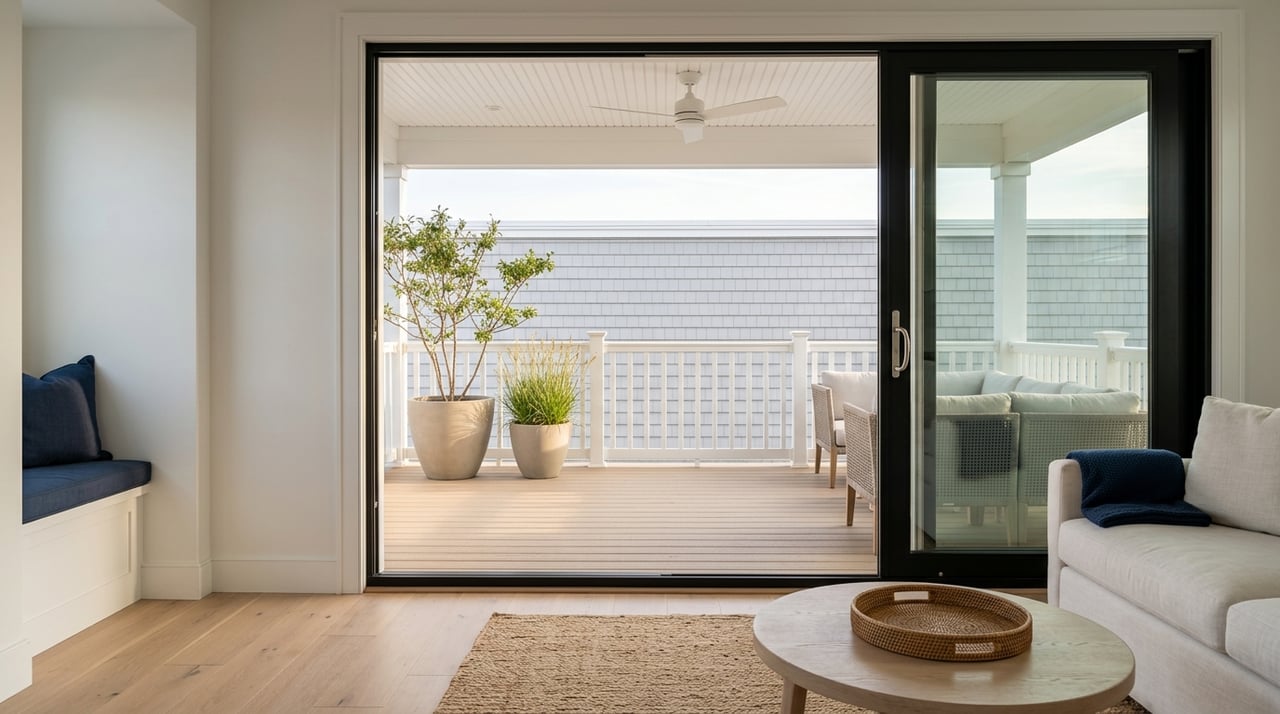
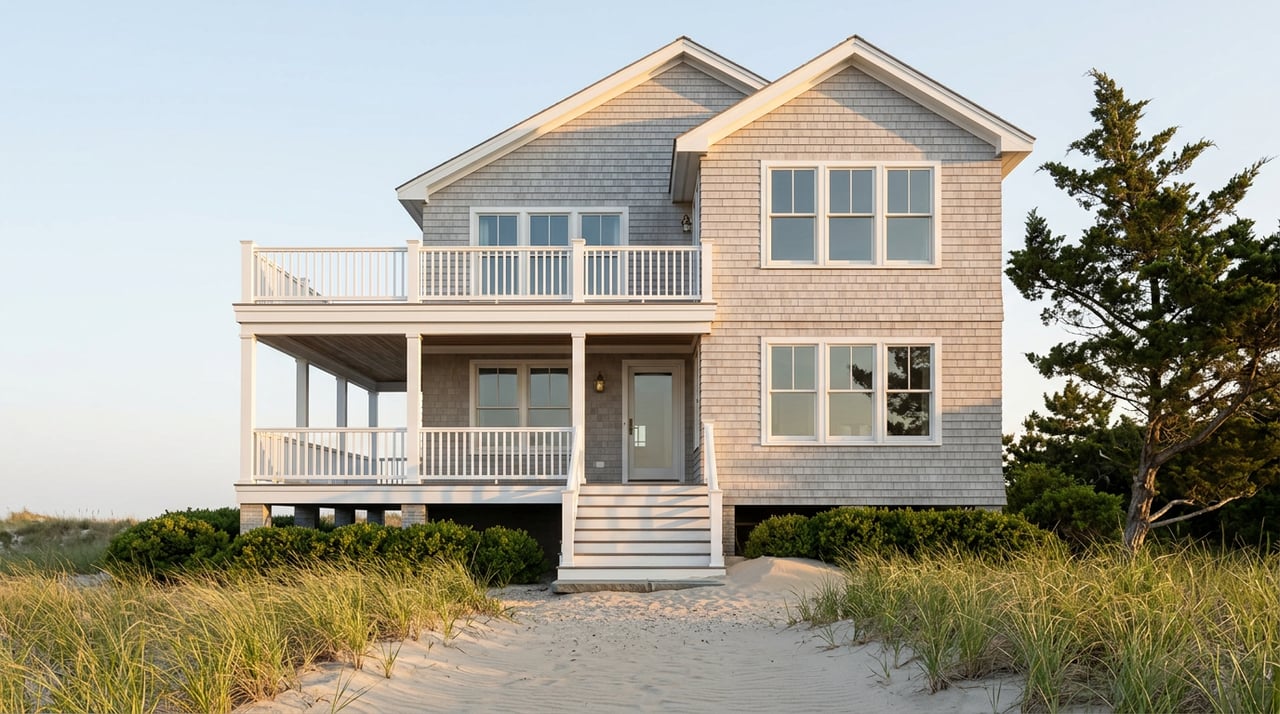
In recent decades, particularly from the 2000s onward, a new wave of development has transformed much of the housing stock yet again. The modern Sea Isle home is increasingly a large, multi-family luxury duplex — built high on pilings, crowned with multiple fiberglass decks, and designed with an "upside-down" floor plan that places the main living area on the top floor to maximize ocean views and capture prevailing breezes. This evolution reflects the town's economic reality: Sea Isle City is, at its core, a premium vacation and rental market, and its built environment has adapted accordingly.
Sea Isle City occupies Ludlam Island in Cape May County, situated along New Jersey's southern coastline as a classic barrier island community — narrow, flat, and entirely flanked by water. To the north, Corson's Inlet separates it from Strathmere. To the south, Townsend's Inlet forms the boundary with Avalon. The Atlantic Ocean lies to the east, and to the west, Ludlam Thorofare and the sprawling salt marshes of the Intracoastal Waterway create a natural boundary that also happens to be one of the more ecologically rich environments in the region, home to diamondback terrapins, blue crabs, and nesting osprey.
The island covers roughly 4.5 square miles of flat, sandy terrain, and its geography is important to understand not just aesthetically but practically — particularly when it comes to flood zone designations and storm exposure, which every buyer should investigate carefully.
In terms of regional accessibility, Sea Isle is positioned approximately 30 miles south of Atlantic City, 85 miles southeast of Philadelphia, and about 150 miles south of New York City. The Garden State Parkway's Exit 17 provides the primary land connection via the JFK Boulevard Causeway. The climate is classified as humid subtropical, though the moderating influence of the surrounding ocean keeps summers slightly cooler and winters slightly milder than the mainland, a distinction that matters meaningfully for those considering year-round residency.
As of early 2026, the Sea Isle City real estate market is best characterized as resilient and premium-priced, operating in a gradual transition from the frenzied seller's conditions of 2022-2023 toward something approaching balance — though "balance" here means something quite different than it would in a typical suburban market.
The median list price currently hovers around $1,600,000, with actual sale prices generally settling between $1,500,000 and $1,550,000. A reported year-over-year dip of approximately 9% in median sales price is best understood not as a signal of depreciation but as a compositional shift in what is being sold — more condominiums and mid-tier units coming to market relative to grand oceanfront properties — rather than any meaningful erosion in underlying property values. Active inventory sits at roughly 60 to 65 listings at any given time, which represents a modest improvement over the extreme scarcity of 2023 and 2024 but still constitutes a meaningfully supply-constrained environment.
Days on market range from approximately 15 to 60 days depending on neighborhood and price point. Renovated, beach-block duplexes — the most coveted product type — routinely go under contract within three weeks of listing. The sale-to-list price ratio sits between 97% and 100%, confirming that well-priced properties are still commanding close to full asking price, though roughly 15 to 20% of listings are undergoing modest price corrections as buyers grow more discerning. The overall designation remains a seller's market, but sellers who price aspirationally without market justification are finding the current buyer pool considerably less forgiving than it was two years ago.
The housing stock in Sea Isle City is shaped almost entirely by the twin forces of geography and investment economics. Because the island's primary function is as a vacation and rental destination, the built environment prioritizes rental yield, square footage, and storm resilience over architectural diversity.
Duplexes and townhomes are the dominant product type and represent the bread and butter of the market. Most are side-by-side or up-and-down configurations featuring four to six bedrooms — sized to accommodate large families and designed to generate serious summer rental income. These typically range from $1.2 million to $2.8 million depending on proximity to the ocean, lot size, and renovation status.
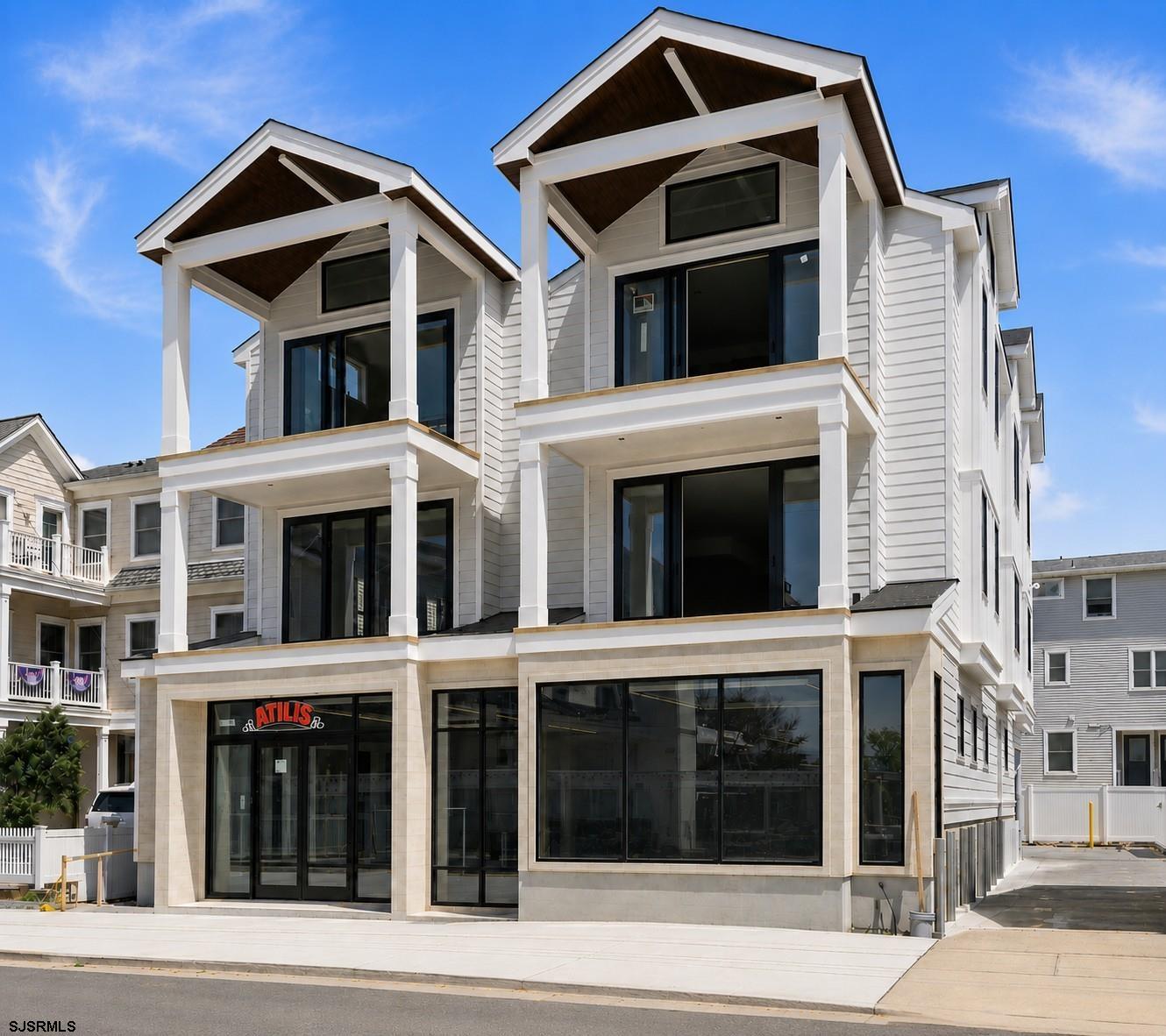
Condominiums provide the most accessible entry point into Sea Isle ownership. Found primarily along the Promenade, within buildings like the Spinnaker, or above commercial spaces along Landis Avenue, condos offer a lower-maintenance "lock-and-leave" lifestyle that appeals to buyers who want Sea Isle access without the demands of managing a larger structure. Pricing generally falls between $650,000 and $1.3 million. HOA due diligence is critical here; the coastal environment is brutal on building exteriors, and reserve fund adequacy should be scrutinized carefully before committing.
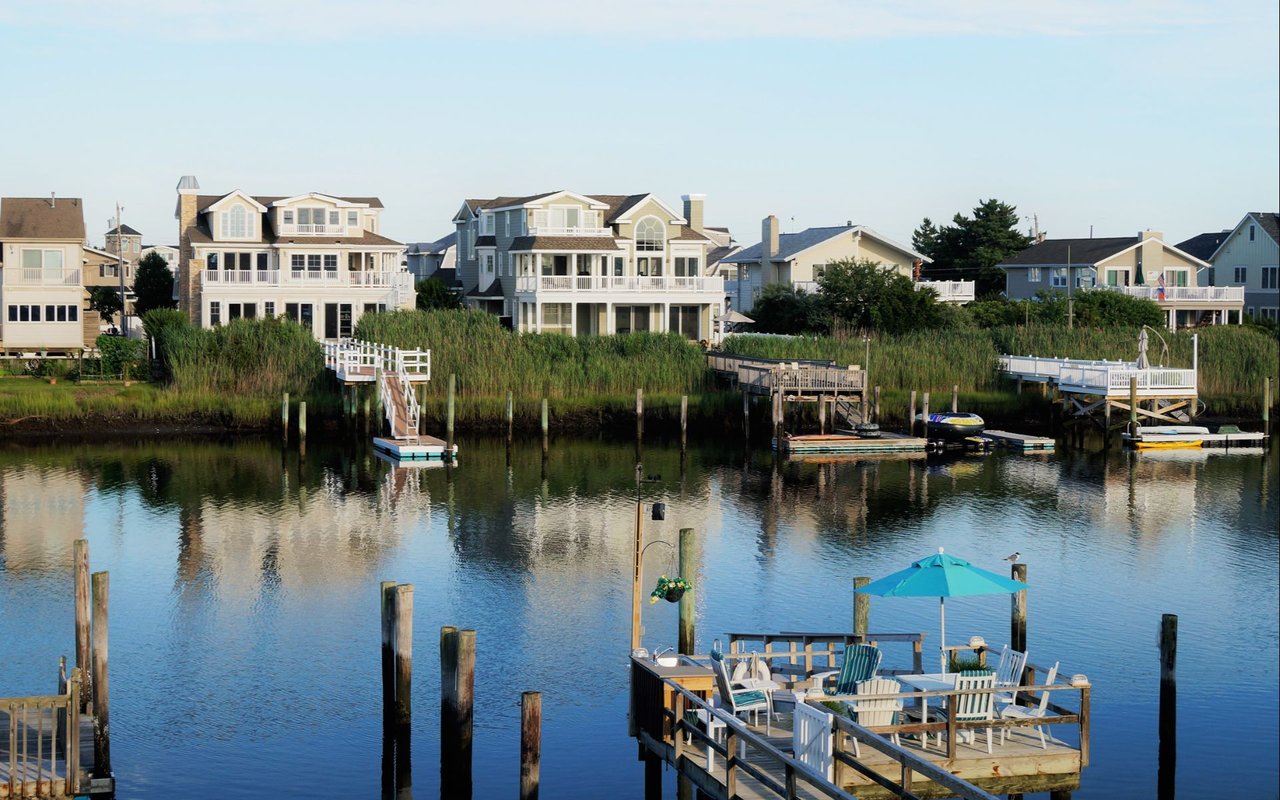
Single-family homes on standard lots are increasingly rare and are frequently treated as tear-down opportunities — acquired for land value and replaced with new-construction luxury estates. On larger bayfront or oceanfront parcels, single-family properties can command $2.5 million to well over $6 million. Bayfront and canal homes on the western side of the island represent a distinct and appealing sub-market: these properties often include private boat slips and docks, catering specifically to the boating and fishing community, and are priced between $2.0 million and $4.5 million.
The "Sea Isle Style" — high pilings, multiple fiberglass decks, vinyl siding, upside-down floor plans — is so pervasive that it has become definitional to the market. Buyers should approach older structures not meeting current elevation standards with particular care.
Purchasing in a barrier island community like Sea Isle City introduces a specific set of considerations that would not arise in a conventional suburban transaction, and buyers who approach the process without awareness of them can face significant unforeseen costs.
The single most consequential factor is flood zone designation and the insurance costs that follow from it. Virtually the entire island sits within a Special Flood Hazard Area as defined by FEMA. Properties in the "V" (Velocity) zone — primarily oceanfront parcels subject to wave action — carry substantially higher insurance premiums than those in the more common "A" zone. Before making any offer, buyers should obtain a current Elevation Certificate and model flood insurance costs at their specific address, as these figures can vary dramatically even between neighboring properties. Equally important is understanding FEMA's "50% Rule": if a home sustains substantial damage or if planned renovations exceed 50% of the structure's current market value, the entire building must be brought into compliance with current elevation codes, a requirement that can impose significant additional cost on renovation projects.
Parking is a material quality-of-life issue that deserves serious attention. Off-street designated spots are not universal, and in peak summer, the absence of guaranteed parking is genuinely disruptive. Zoning for non-conforming structures is another area requiring careful legal review — older cottages that predate current setback requirements may carry meaningful limitations on future expansion or renovation without variance approval.
For buyers considering the property as an investment, school district assignment is relevant primarily from a tax standpoint. Sea Isle operates as a non-operating district, meaning students are sent to the Ocean City School District. This arrangement contributes to a notably low effective property tax rate — approximately 0.5% to 0.9% — which is a meaningful advantage relative to most New Jersey communities. Finally, timing matters: the optimal window for closing is before Memorial Day, allowing buyers to capture the full summer rental season, which can generate enough income to materially offset annual carrying costs.
Sea Isle's market has a distinct seasonal rhythm that sellers who understand it can exploit meaningfully. The primary selling season is early spring — roughly March through May — when buyers are motivated to close before Memorial Day and secure summer use or rental income. A secondary window opens in September and October, when buyers who spent the summer in Sea Isle are motivated to acquire a property for the following year while the experience is still fresh.
In the current 2026 environment, accurate pricing is not merely advisable — it is strategic necessity. Properties priced to reflect genuine market conditions are selling in 15 to 30 days. Those priced aspirationally are sitting for 90 days or longer, accumulating market time that signals weakness to subsequent buyers and frequently necessitating price reductions that ultimately net less than accurate initial pricing would have yielded.
High-return pre-sale investments in the Sea Isle context are well defined by market data. Outdoor living upgrades — fiberglass decks with modern railings, outdoor showers, and professional-grade grills — resonate strongly with buyers who are fundamentally purchasing a lifestyle, not just a structure. Mechanical systems matter disproportionately here: a newer HVAC system (five years or less) is a compelling selling point because buyers are acutely aware that salt air corrodes mechanical components at an accelerated rate. Kitchen and bathroom refreshes with quartz countertops and coastal neutral palettes — warm whites, soft blues — remain the aesthetic standard that the market rewards.
Staging philosophy has shifted toward what designers are calling "coastal minimalist": maximize natural light, remove visual clutter, emphasize views, and present the home as a turnkey experience. Many Sea Isle sales now include furniture in the purchase price, a convention that reflects the investment-buyer orientation of the market. For sellers with documented rental history, presenting two to three years of income data is a meaningful value-add that directly supports premium pricing to the investor segment of the buyer pool.
Sea Isle's dining and nightlife scene is anchored by its heritage as a working fishing port and amplified by its reputation as one of the Shore's most socially animated communities. The result is an eclectic mix that can take you from a casual dockside seafood platter at noon to a refined Italian dinner by evening without ever feeling out of step with your surroundings.
Fish Alley — centered on Park Road — is the historic culinary heart of the city. Mike's Seafood is the institution here: a local legend for fresh-off-the-boat catches that defines what "shore seafood" should taste like. Carmen's and Marie's Seafood round out the dockside experience with their own loyal followings. These are not restaurants trying to be something they are not; they are operationally honest, deeply local, and consistently excellent.
Reflecting the town's Italian-American heritage, high-end Italian dining holds an important place in the culinary landscape. A Modo Mio is the flagship of this category — sophisticated, refined, and appropriate for a genuine occasion. La Finestra and Basilico's Marketplace offer their own interpretations of the tradition, with Basilico's also serving as a gourmet market for prepared foods and premium provisions.
The bar scene is a defining feature of Sea Isle's social identity. The Point is the summer anchor: a massive outdoor tiki bar that draws enormous crowds with live music and a reliably tropical energy. The Ocean Drive (OD) and The Dead Dog Saloon are iconic institutions for live bands and the beloved Shore tradition of the "no-shower Happy Hour" — an unwritten social contract that makes Sea Isle feel genuinely egalitarian. O'Donnell's Pour House provides a more traditional Irish pub atmosphere for those who prefer their evenings quieter.
Excursion Park, located at JFK Boulevard and Pleasure Avenue, serves as the town's community entertainment hub throughout summer 2026, hosting free Saturday night concerts featuring tribute acts spanning Journey, Billy Joel, and Motown legends, as well as family-oriented character shows on Monday evenings and a weekly farmers market every Tuesday morning.
Shopping in Sea Isle City is organized primarily along Landis Avenue and the Promenade, and it reflects the character of the town itself: independent, locally-rooted, and oriented toward the vacation lifestyle rather than mass-market retail.
For beach lifestyle apparel and surf culture, Heritage Surf & Sport and Global Pursuit are the go-to destinations. Women's boutiques including Groovy Girlz, Coastal Palms, and The Birdcage carry resort wear and distinctive jewelry that defines the aesthetic the town projects. Breezin' Up is the authoritative source for Sea Isle City-branded sweatshirts and casual wear — if you want to leave wearing the town's identity on your chest, this is the destination.
For gifts and sundries, Dalrymple's Card & Gift and Sands Department Store are long-standing community institutions that carry everything from beach chairs and toys to home décor and fine greeting cards. Sands in particular functions as a kind of emergency depot for vacationers who arrive to discover they forgot sunscreen, an umbrella, or a beach chair — it operates as a community service as much as a retail establishment.
For groceries, ACME Markets at 63rd and Landis remains the primary full-service option, functioning as the weekly provisioning hub for most vacationing families. CVS on Landis Avenue handles pharmacy needs and quick essentials. Basilico's Marketplace and the seafood purveyors in Fish Alley serve as the gourmet alternative for those who prioritize quality above convenience.
Despite its compact 4.5 square miles, Sea Isle City has constructed a recreational infrastructure that punches considerably above its weight, with something substantive available for virtually every interest and age group.
The beaches are the obvious foundation — five miles of wide, white-sand Atlantic shoreline protected by a robust dune system and consistently ranked among New Jersey's finest. Townsend's Inlet Waterfront Park at the southern end of the island offers a quieter, more naturalistic beach experience, with exceptional bird-watching, preserved dunes, and a pace that contrasts meaningfully with the central hub. For those seeking the energy of the crowd, the central beaches deliver a classic, high-summer Jersey Shore experience in full.
Dealy Field, running from 59th to 63rd Street, is the athletic heart of the community. It concentrates an impressive array of facilities within a small footprint: tennis and pickleball courts, basketball courts, bocce, a street hockey rink, and a skate park. The Play by the Bay playground is a generational institution for families — a massive wooden-style structure that has been a childhood rite of passage for Sea Isle visitors for years. The adjacent bay-side fishing pier and kayak launch provide quiet access to the Intracoastal Waterway for crabbing, paddleboarding, and fishing, offering a contemplative counterpoint to the beach's energy.
The Promenade — a 1.5-mile paved oceanfront walkway stretching from 29th to 57th Street — is the town's linear gathering place. Sunrise bike rides, morning runs, and evening strolls have their natural home here, and the absence of a traditional amusement boardwalk keeps the atmosphere comparatively serene. For golf, while no courses exist on the island itself, Shore Gate Golf Club and Avalon Golf Club are both within a 15-minute drive to the mainland.
Sea Isle City has a culture that resists easy categorization and is better felt than described. It is perhaps most accurately characterized as "flip-flop formal" — a community where a morning surf session transitions seamlessly into a high-end Italian dinner, where no one is underdressed, and where the social hierarchy is built on enthusiasm rather than exclusivity.
At its core, the town's identity is shaped by its Italian-American heritage, its working waterfront history, and a collective personality that is louder, friendlier, and more uninhibited than what you encounter in quieter neighbors like Avalon or the family-conservative Ocean City. Sea Isle people are known for knowing it, and for wearing that identity with genuine pride.
The seasonal calendar defines the cultural rhythm. The Polar Bear Plunge in February is more than a cold-water stunt — it is a weekend-long festival that reaffirms the town's year-round community bond and signals to the broader Shore world that Sea Isle never fully closes. The Skimmer Festival in late June, featuring a seaside craft market and antique auto show, marks the true emotional launch of summer. The Sara the Turtle Festival reflects a quieter but genuine community commitment to coastal conservation that runs beneath the party surface. Saturday nights throughout summer belong to Concerts Under the Stars at Excursion Park, where the act of gathering on the grass to hear a Journey tribute band with several hundred neighbors becomes, over time, something genuinely irreplaceable.
Volunteerism is woven into the social fabric in ways that visitors often don't immediately see. The Beach Patrol and volunteer fire department are not peripheral institutions — they are social anchors, hosting fundraisers, races, and events that shape the summer calendar as meaningfully as any commercial venue.
Sea Isle City operates as a non-operating school district, which means it maintains a Board of Education for administrative and funding purposes but does not operate its own school buildings. Students are instead enrolled in the highly regarded Ocean City School District, an arrangement that has meaningful implications both for educational quality and property tax rates.
At the primary and intermediate levels, children attend Ocean City Primary School for grades K through 3 and Ocean City Intermediate School for grades 4 through 8. Both schools carry strong ratings — typically 7 to 8 out of 10 on GreatSchools metrics — with consistent marks for academic progress and standardized test performance. At the secondary level, Ocean City High School serves grades 9 through 12 and has built a solid regional reputation for its AP course breadth, college readiness outcomes, and competitive athletic programs.
For families seeking private education, Bishop McHugh Regional Catholic School in Cape May Court House serves preschool through 8th grade and is the primary parochial option in the area. Ark-Kids Club provides local early childhood education for the youngest learners.
The non-operating district structure carries an important financial consequence worth emphasizing: Sea Isle City's effective property tax rate sits between approximately 0.5% and 0.9%, significantly below the New Jersey statewide average. On a property valued at $1.5 million, this translates to annual tax liability that is substantially more manageable than comparable coastal communities elsewhere in the state — a factor that meaningfully improves the long-term economics of ownership.
For higher education, Atlantic Cape Community College has a campus in Cape May Court House roughly 15 minutes away, while Stockton University in Galloway is approximately 35 minutes by car and offers full undergraduate and graduate programming.
Sea Isle City's connection to the broader regional transportation network is anchored by its favorable positioning relative to the Garden State Parkway, the main north-south artery of the New Jersey coastline. Exit 17 provides direct access to the island via the JFK Boulevard Causeway, the primary bridge linking Sea Isle to the mainland. Route 9, running parallel to the Parkway, offers a slower, more commercial alternative with local services and lower-traffic driving through the surrounding communities.
For regional destinations, the distances are manageable but subject to meaningful seasonal variability. Atlantic City sits approximately 35 minutes north under normal conditions. Cape May is roughly 25 minutes to the south. Philadelphia is 1.5 to 2 hours depending heavily on summer weekend traffic, which on the Garden State Parkway on a Friday evening in July should be treated as a serious planning consideration rather than an incidental inconvenience. New York City, at approximately 150 miles, is a roughly 2.5 to 3-hour drive under favorable conditions.
Public transportation is available but limited in the way that is common to shore communities. NJ Transit Bus Routes 315 and 319 provide seasonal and year-round service to Philadelphia (approximately 1 hour and 50 minutes) and New York City (approximately 3 hours and 15 minutes). For rail access, the Atlantic City Rail Line connects Atlantic City to Philadelphia's 30th Street Station; commuters who prefer the train typically drive to the Absecon or Egg Harbor City stations to board. Within the island itself, biking is the dominant mode of local movement, particularly during summer, and the Promenade and flat grid layout make Sea Isle genuinely bike-friendly in a way that larger, more congested shore towns are not.
Sea Isle's geography creates meaningful distinctions between its streets that go well beyond simple proximity to the water. Understanding these micro-locations is essential to evaluating any specific property.
The beach-block streets between the Promenade and Ocean Drive represent the island's most coveted real estate corridor. Properties on these blocks — particularly in the central section between roughly 40th and 57th Streets — offer walking access to the beach, proximity to Excursion Park and the town's social center, and the premium rental yields that come from that combination. These are the streets where renovated duplexes move fastest and command the highest per-square-foot values.
Townsend's Inlet, at the southern end of the island approaching Avalon, offers a distinctly different experience: quieter streets, preserved natural dunes, and a more contemplative beach environment that attracts buyers prioritizing nature and privacy over proximity to nightlife. Properties in this section appeal to a different buyer profile — often families and couples seeking a calmer Shore experience — and can represent relative value compared to the central hub.
The bayfront streets on the western side of the island, particularly those with canal frontage and private dock access, constitute their own premium sub-market. Addresses on or near the Intracoastal Waterway trade the ocean view for unobstructed sunset vistas over the salt marshes and direct boating access to the back bays — a meaningful differentiator for buyers with active water recreation priorities.
Landis Avenue and the streets immediately surrounding it form the commercial and social spine of the community, and residential properties in this zone trade convenience for noise and foot traffic — a worthwhile exchange for some, a dealbreaker for others.
What keeps people coming back to Sea Isle City — and what ultimately drives them to buy here, often after years of renting — is not any single amenity or feature but rather the specific emotional experience the town produces reliably and consistently, summer after summer. It is a place that manages to be simultaneously unpretentious and genuinely beautiful, rowdy and community-minded, thoroughly modern in its real estate product and irreversibly nostalgic in its spirit.
People love Sea Isle because it does not try to be Avalon's understated exclusivity or Ocean City's family-conservative atmosphere. It has found its own identity — welcoming, energetic, Italian-American in its bones, salt-air honest in its character — and it holds that identity with a confidence that is, ultimately, contagious. The person who summers here once and doesn't return is the exception. The person who rents for five years, then buys, then raises children who will eventually buy their own place down the street — that is the rule.
It is the kind of place where the Saturday night concert on the grass, the morning crab off the Dealy Field pier, the no-shower happy hour at The OD, and the sunrise bike ride on the Promenade are not separate experiences but expressions of the same coherent thing: a community that has figured out, over more than a century, how to genuinely enjoy itself. That is rarer than it sounds, and it is exactly what the market is pricing when you see a $1.5 million sale price on a stilted duplex four blocks from the ocean. You are not just buying a property. You are buying access to something that a great many people have decided is worth it.
There's plenty to do around Sea Isle City, including shopping, dining, nightlife, parks, and more. Data provided by Walk Score and Yelp.
Explore popular things to do in the area, including Megu Sushi - Sea Isle, Fratelli's Wood Fired Pizzeria, and La Fontana Coast.
| Name | Category | Distance | Reviews |
Ratings by
Yelp
|
|---|---|---|---|---|
| Dining · $$ | 0.05 miles | 35 reviews | 3.9/5 stars | |
| Dining · $$ | 0.07 miles | 139 reviews | 2.9/5 stars | |
| Dining · $$$ | 0.08 miles | 327 reviews | 3.3/5 stars | |
| Dining | 0.09 miles | 23 reviews | 4.5/5 stars | |
| Dining · $$ | 0.1 miles | 178 reviews | 2.4/5 stars | |
| Dining · $ | 0.1 miles | 13 reviews | 4.4/5 stars | |
| Dining · $ | 0.11 miles | 68 reviews | 3.3/5 stars | |
| Dining · $$ | 0.12 miles | 163 reviews | 3.9/5 stars | |
| Dining | 0.16 miles | 11 reviews | 4.8/5 stars | |
| Dining · $ | 0.22 miles | 7 reviews | 3.9/5 stars | |
| Dining · $ | 0.23 miles | 63 reviews | 4.5/5 stars | |
| Dining | 0.23 miles | 85 reviews | 4.1/5 stars | |
| Dining · $$ | 0.27 miles | 107 reviews | 4.7/5 stars | |
| Dining | 0.3 miles | 0 reviews | 0/5 stars | |
| Dining | 0.3 miles | 0 reviews | 0/5 stars | |
| Dining · $$ | 0.31 miles | 148 reviews | 4.1/5 stars | |
| Dining | 0.31 miles | 72 reviews | 4.5/5 stars | |
| Active | 0.12 miles | 3 reviews | 3.7/5 stars | |
| Active | 0.22 miles | 5 reviews | 3.8/5 stars | |
| Active | 0.24 miles | 18 reviews | 4.2/5 stars | |
| Active | 0.25 miles | 9 reviews | 5/5 stars | |
| Nightlife | 0.29 miles | 16 reviews | 3.9/5 stars | |
| Beauty | 0.11 miles | 0 reviews | 0/5 stars | |
| Beauty | 0.26 miles | 6 reviews | 2.2/5 stars | |
|
|
||||
|
|
||||
|
|
||||
|
|
||||
|
|
||||
|
|
Sea Isle City has 1,125 households, with an average household size of 1.84. Data provided by the U.S. Census Bureau. Here’s what the people living in Sea Isle City do for work — and how long it takes them to get there. Data provided by the U.S. Census Bureau. 2,079 people call Sea Isle City home. The population density is 943 and the largest age group is Data provided by the U.S. Census Bureau.
Total Population
Population Density Population Density This is the number of people per square mile in a neighborhood.
Median Age
Men vs Women
Population by Age Group
0-9 Years
10-17 Years
18-24 Years
25-64 Years
65-74 Years
75+ Years
Education Level
Total Households
Average Household Size
Average individual Income
Households with Children
With Children:
Without Children:
Marital Status
Blue vs White Collar Workers
Blue Collar:
White Collar:
Explore detailed neighborhood profiles to see what makes each area unique — from amenities to nearby attractions.